
Portfolio / Editorial / Headphone buying guide
Buying guide
How to choose headphones: a practical buying guide
Types, fit, sound, noise cancelling, codecs and battery life, explained in plain language so you can match a pair to the way you listen.
Pavinci Group editorial. Original text written for this portfolio demonstration.
Independent portfolio demonstration by Pavinci Group. Not affiliated with, endorsed by, or sponsored by SoundGuys. All trademarks belong to their respective owners. This guide does not recommend specific products.

Headphones are personal. The pair that suits a daily train commute is rarely the best choice for a run, a long video call or a quiet evening with an album. Specifications help, but only once you know which ones matter for the way you listen.
This guide walks through the decisions in the order that usually makes sense: the type of headphone, how it fits, how it sounds, whether you need noise cancelling, how it connects and how long the battery lasts. At the end, we match common situations to the features that matter most. It does not recommend specific models; it gives you a framework for reading any product page or comparison with confidence.
Headphone types
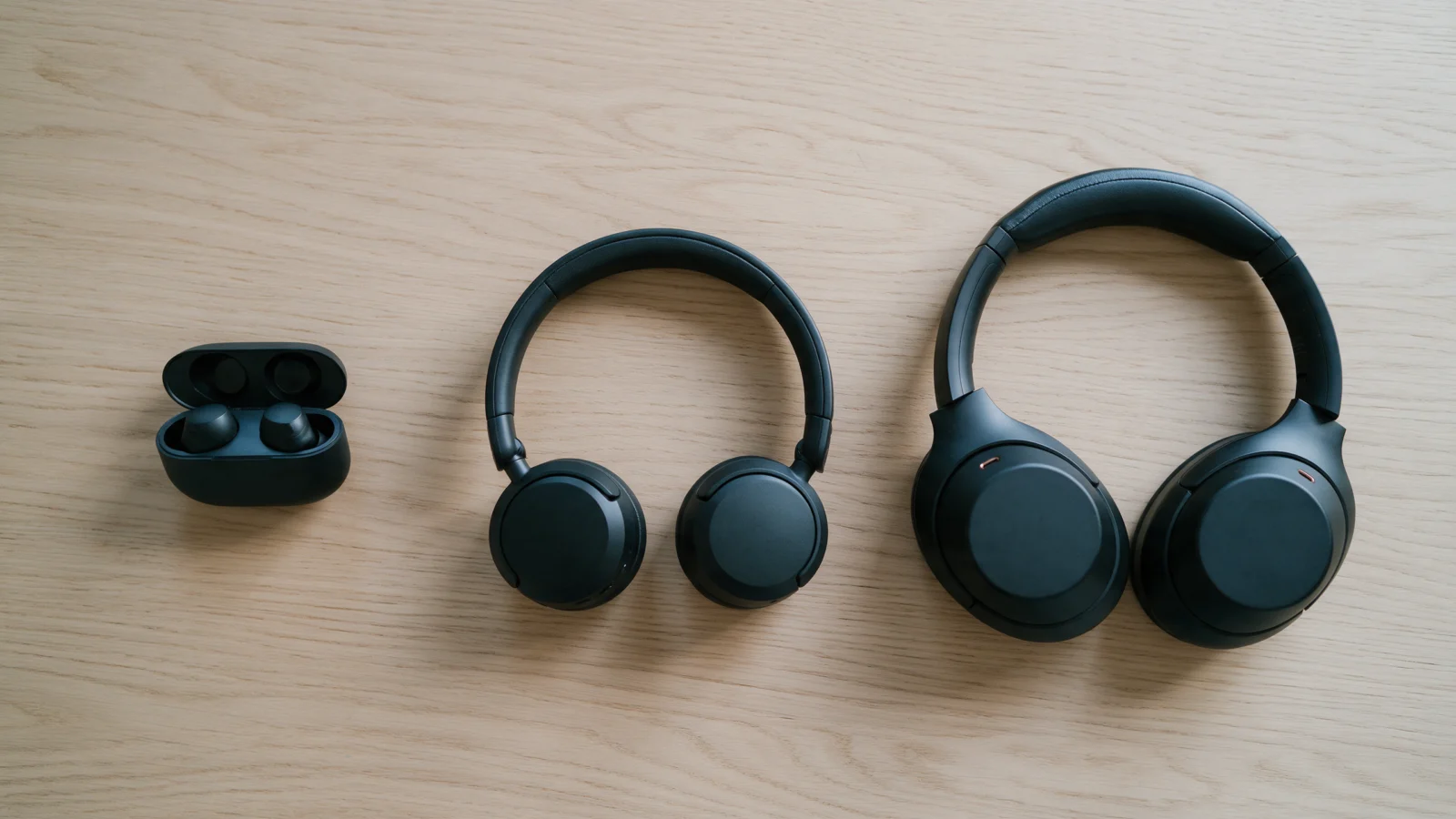
Over-ear headphones
Large cups surround the ear and rest on the head rather than on the ear itself. They usually offer the most comfort over long sessions, the largest drivers and the most room for batteries and noise-cancelling hardware. The trade-off is size: even folding models take up space in a bag.
Within over-ear designs, closed-back cups seal sound in and outside noise out, which suits commuting and offices. Open-back cups let air and sound pass through the grille. They tend to sound more spacious, but they leak sound to people nearby and block very little noise, so they are best kept for quiet rooms at home.
On-ear headphones
Smaller pads sit on the ear. They are lighter and more compact than over-ear models, but the pressure on the ear can become uncomfortable over a few hours, and they usually isolate less noise.
True wireless earbuds
Two independent buds that charge in a pocketable case. They are the most portable option and a natural fit for phones, calls and exercise. Sound quality and noise cancelling have improved considerably, but battery life per charge is shorter than in larger headphones, and fit varies a lot from person to person.
Wired in-ear earphones and other designs
Wired in-ear models remain popular with musicians and listeners who want consistent sound without batteries or pairing. Many phones no longer have a headphone jack, so check whether you would need a USB-C adapter. Neckband earphones, sport hooks and open-ear designs that sit outside the ear canal also exist for specific needs, such as staying aware of traffic while running.
Comfort and fit
Fit determines comfort, but it also shapes sound. A good seal is what gives earbuds and closed headphones their bass, and it lets noise cancelling work properly.
For over-ear and on-ear headphones, look at weight, clamping force and the size of the ear cups. A heavier pair can feel fine for an hour and tiring after three. If you wear glasses, softer pads and moderate clamping force make a noticeable difference. Memory-foam pads spread pressure; leatherette seals well but can feel warm, while fabric or velour breathes better.

For earbuds, the shape of the bud and the eartips matter most. Most models include several tip sizes, and trying each one is worth the minute it takes; some companion apps include a fit test. Foam tips can seal more consistently than silicone for some ears. If earbuds tend to fall out, look for wing tips or hooks.
Finally, consider the controls. Touch controls are convenient but easy to trigger by accident; physical buttons are easier to use with gloves or on the move.
Sound signature
Sound signature describes how a pair balances bass, mids and treble. There is no correct answer, only preferences and situations.
- Neutral or balanced: aims to reproduce recordings without emphasising any range. It suits a wide variety of genres and careful listening.
- Warm or bass-forward: lifts the low end, which can feel more energetic in noisy places, but can mask vocals if pushed too far.
- V-shaped: boosts both bass and treble for a lively, exciting sound.
- Bright: emphasises treble detail, which some listeners find crisp and others find tiring.
Many wireless headphones include an equaliser in their companion app, so the default tuning is less of a fixed decision than it used to be. Even so, a good default saves time, and an app only helps if it is available for your phone. Frequency response graphs, which some reviewers publish, show how a pair is tuned; they are most useful when compared side by side using the same measurement method.
Active noise cancelling
Active noise cancelling (ANC) uses microphones to sample ambient sound and plays an opposing signal to reduce it. It works best on steady, low-frequency noise such as engines, air conditioning and train rumble. It is less effective on sudden or high-pitched sounds, such as voices or clattering cutlery, where passive isolation from a good seal does most of the work.
Strong ANC is valuable for frequent travellers and open-plan offices, and it lets you listen at lower volume in noisy places, which is easier on your hearing. On the other hand, ANC uses power, so battery life is usually shorter with it switched on, and some people notice a sensation of pressure while it is active.
Most ANC headphones also offer a transparency or ambient mode that passes outside sound through the microphones, useful for announcements, short conversations and staying aware of traffic. If you rarely listen in noisy places, ANC is a nice extra rather than a requirement, and the money may be better spent on comfort or sound quality.
Connectivity and codecs
Most wireless headphones connect over Bluetooth. The Bluetooth version affects range, stability and power use, but the codec has more influence on sound quality and latency.
A codec is the format used to compress audio for transmission. SBC is the universal baseline that every Bluetooth headphone supports. AAC is widely used and works particularly well with Apple devices, while its quality on Android varies by phone. The aptX family, including aptX Adaptive, is common on Android phones with Qualcomm chips. LDAC can carry more data than the others and is supported by many Android phones. For a higher-quality codec to work, both the phone and the headphones must support it, so check the phone first.
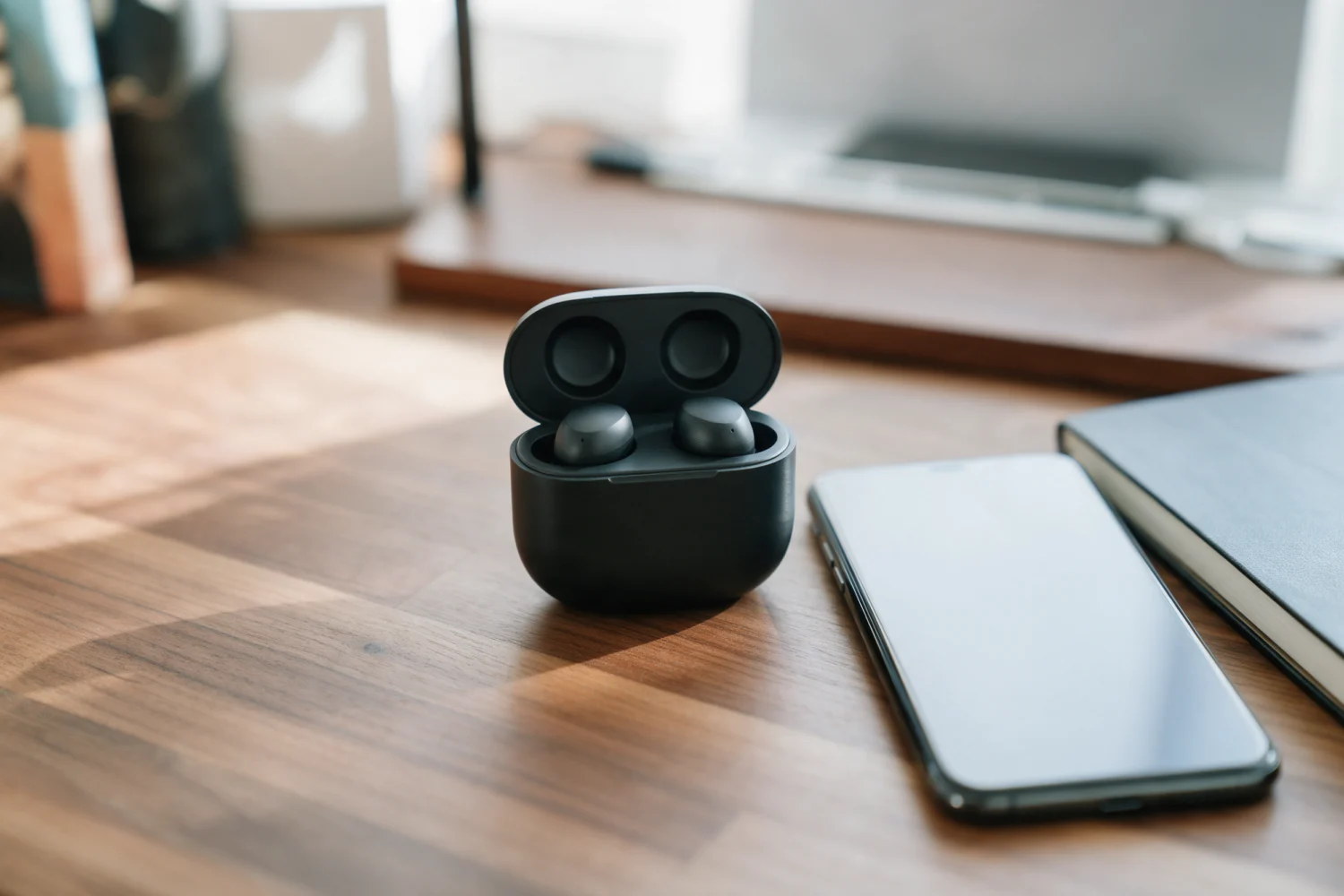
Newer devices are adopting Bluetooth LE Audio and its LC3 codec, which is designed to deliver good quality at lower bitrates and enables Auracast broadcast audio.
Multipoint lets headphones stay connected to two devices at once, such as a laptop and a phone, and switch between them when a call comes in. If you move between devices during the day, it is one of the most useful features to look for. For gaming and video, latency matters: some headphones offer a low-latency mode, and a wired connection or a dedicated wireless dongle remains the most reliable option for competitive play. Wired listening, through a 3.5 mm cable or USB-C, avoids codecs altogether.
Battery life
Battery figures are usually measured under specific conditions, often at moderate volume and sometimes with noise cancelling switched off. Treat them as a way to compare models rather than a promise.
For over-ear headphones, look at the figure with ANC on if you plan to use it. For earbuds there are two numbers: listening time per charge and the total including the charging case. The per-charge figure matters most for long flights or workdays without breaks.
Quick charging, where a few minutes on the charger gives a useful amount of playback, helps if you often forget to charge. Wireless charging cases add convenience. Over time, batteries lose capacity, and in earbuds the battery usually cannot be replaced, so check the warranty and whether the manufacturer offers repair or battery replacement.
Matching headphones to how you listen
Once you know the trade-offs, the right feature set usually follows from where and how you listen most.
| Situation | Prioritise | Nice to have |
|---|---|---|
| Commuting and travel | Noise cancelling, comfort over hours, battery life with ANC on | Transparency mode, folding design, carry case |
| Office and calls | Microphone quality, multipoint, comfort | ANC for open-plan spaces, easy mute control |
| Running and the gym | Secure fit, sweat and water resistance, low weight | Open-ear design or transparency mode for awareness |
| Listening at home | Sound quality and comfort; open-back if the room is quiet | Wired option, high-quality codec support |
| Gaming | Low latency, microphone, comfort | Wired or dongle connection |
Water resistance is shown as an IP rating. IPX4 means protection against splashing water, which covers sweat and light rain; IPX7 means the device can withstand immersion in water up to one metre for 30 minutes.
Conclusion
Start with how and where you listen, then choose the type, and only then compare sound, features and battery figures. A comfortable pair that suits your routine will be used far more than a technically superior one that stays in a drawer.
When comparing models, check codec support against your phone, read battery life with the features you will actually use, and try the fit if you can. To see these criteria applied side by side, the comparison demo linked below lays out the same kinds of specifications in a sortable table.