The short version: measure both feet in the evening, use the length of the longer foot, leave about a thumb’s width (roughly half an inch) in front of your longest toe, and check each brand’s own size chart and return policy before you order.
Step 1: Measure your feet at home
- Measure later in the day. Feet swell slightly during the day and during runs, so evening measurements are closer to your running size.
- Wear your running socks. Sock thickness can change fit by up to half a size.
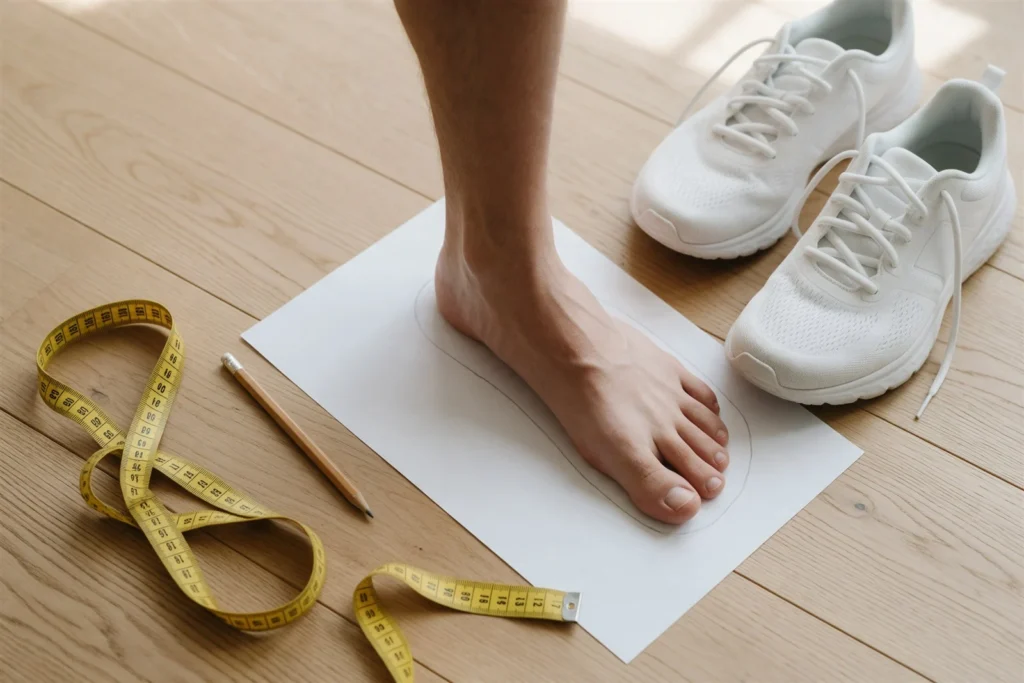
- Trace your foot. Stand on a sheet of paper against a wall, keep your weight on that foot and trace around it with a pencil held upright.
- Measure length and width. Measure from the back of the heel to the tip of the longest toe (not always the big toe), and across the widest part of the forefoot.
- Repeat on the other foot. Most people have one slightly longer foot. Size for the longer one.
Step 2: Convert with the brand’s own chart
A US men’s 10 is not identical across brands. Nike, HOKA and adidas each publish a size chart that converts foot length in inches or centimeters into their sizes. Use the chart on the official store for the exact shoe you are buying, because sizing can also change between models from the same brand.
Step 3: Know how each shoe fits
- Nike Pegasus 42: Nike says the updated fit gives a little extra room at the toes and forefoot compared with the Pegasus 41. Most runners can start with their usual Nike size.
- HOKA Clifton 10: reviewers describe a snug, lower-volume forefoot. If you have wide feet, look for the wide version rather than going up a full size.
- adidas Adizero Evo SL: reviewers note a tapered toe box and some say it feels slightly short at first. If you are between sizes, the larger size is often the safer choice.
These notes summarize published reviews; individual feet vary, so treat them as a starting point.
Step 4: Leave the right amount of space
Aim for about a thumb’s width between your longest toe and the end of the shoe. Too little room leads to bruised toenails on downhills and long runs; too much and your foot slides, causing blisters. The heel should feel secure without slipping, and the widest part of your foot should sit at the widest part of the shoe.
Step 5: Check the return policy before you buy
Even with careful measuring, the only real test is wearing the shoe. Before ordering, read the store’s return and exchange policy: how many days you have, whether shoes must be unworn, and whether running indoors on a treadmill counts as worn. Try new shoes on carpet or a treadmill first so you can still return them if they don’t fit.

 Product Pageadidas Adizero Evo SL: Race-Day Speed for Everyday TrainingLight, bouncy Lightstrike Pro foam in a trainer you can wear every week. Here is who the Evo SL suits, and what to know about fit and durability.View the page
 Product PageHOKA Clifton 10: Max Comfort for Long, Easy MilesThe most cushioned Clifton yet, with a new 8 mm drop and a soft knit upper. Here is who it is for and what to know about the fit.View the page
 Product PageNike Pegasus 42: The Everyday Running Shoe, UpgradedResponsive ReactX foam, a new full-length Air Zoom unit and a roomier toe box make Nike’s most popular trainer a better all-rounder than ever.View the page