The short version: choose OLED if you mostly watch in the evening or in a dim room and want the best contrast, viewing angles and motion. Choose Mini-LED if your room is bright, you watch a lot of daytime TV or news with static logos, or you want a very large screen for less money.
How each technology works
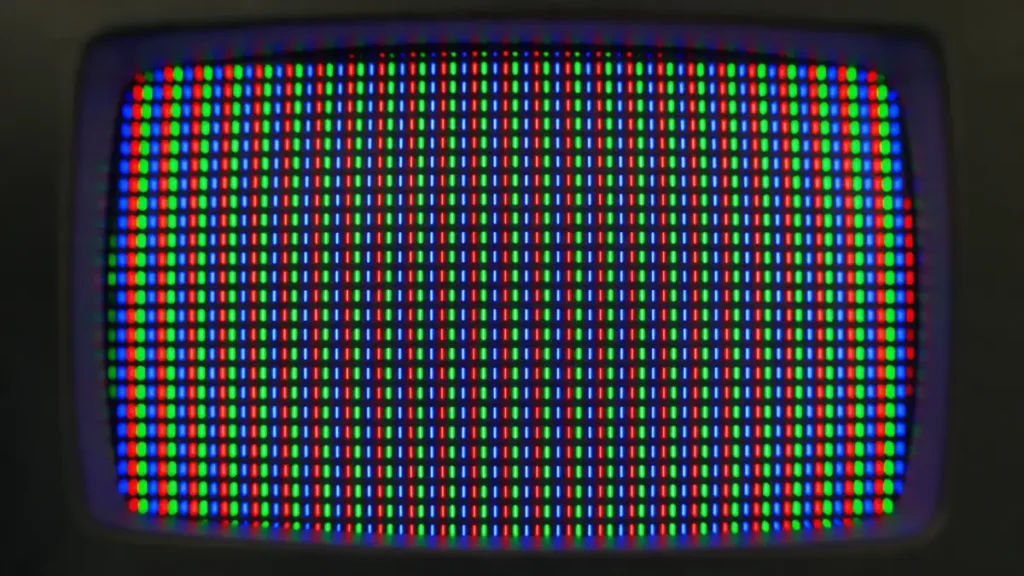
OLED TVs have no backlight. Each of the more than 8 million pixels in a 4K panel produces its own light and can switch off completely. That gives perfect black and pixel-level control of contrast.
Mini-LED TVs are LCD TVs with a backlight made of thousands of tiny LEDs grouped into dimming zones. The more zones, the better the TV can darken parts of the image while keeping others bright. It is a huge improvement over older LED TVs, but light can still bleed around bright objects on dark backgrounds, an effect called blooming.
Contrast and black levels
OLED wins clearly. Because pixels switch off individually, stars on a night sky, subtitles on a black bar and dark movie scenes look clean, with no grey haze or halo. The best Mini-LED TVs get close, but none fully match OLED in a dark room.
Brightness
Mini-LED usually wins. A strong backlight can push full-screen brightness much higher, which helps in sunny rooms and makes HDR highlights pop. OLED brightness has improved every year, and models like the LG C6 handle typical living rooms well, but if sunlight hits your screen for hours a day, Mini-LED is the safer bet.
Burn-in
OLED pixels can retain a faint image if the same bright, static element stays on screen for many hours, every day, for months. Think news tickers, channel logos or a game’s HUD left on all day. Modern OLED TVs include pixel-shifting, logo-dimming and refresh routines that make this rare in normal mixed viewing. Mini-LED TVs are not susceptible to burn-in.
Bright rooms vs dark rooms
- Dark or dim room, mostly evening viewing: OLED.
- Bright room with windows facing the screen: Mini-LED.
- Mixed use, lamps on in the evening: either works; OLED for movie fans, Mini-LED for heavy daytime viewers.
Gaming
Both technologies can be excellent for gaming. OLED’s near-instant pixel response keeps fast motion very sharp, and LG’s OLEDs are especially popular with console and PC players thanks to four HDMI 2.1 inputs and variable refresh rate support. Mini-LED TVs can be just as capable on paper; check the number of full-bandwidth HDMI 2.1 ports and VRR support on the specific model.
Viewing angles
OLED keeps color and contrast even when you sit well off to the side, which helps with wide sofas and open-plan rooms. Many Mini-LED TVs lose some contrast and color at wider angles.
Our recommendation by viewer
- Movie lovers and home-theater fans: OLED.
- Sports fans in a bright living room: Mini-LED.
- Console and PC gamers: OLED, unless the room is very bright.
- Buying 85 inches or larger on a budget: Mini-LED.
If OLED is the right fit, start with our LG OLED evo C6 review and the LG C6 vs C5 comparison.

 Buying GuideHow to Spot a Real Black Friday Deal in 2026Not every red price tag is a bargain. Seven quick checks help you tell a genuine discount from a marketing trick before you spend.Read the guide
 Buying GuideThe 2026 Tech Gift GuideSix tech gifts that people actually use every day, from earbuds and headphones to a smartwatch, a cordless vacuum and an OLED TV, with who each one is best for.Read the guide
 ComparisonLG C6 vs LG C5: Buy the New OLED or Save on Last Year's Model?The C6 is better on paper, but the C5 is often much cheaper. Here is what actually changed, and which one makes sense for the way you watch.See the comparison